
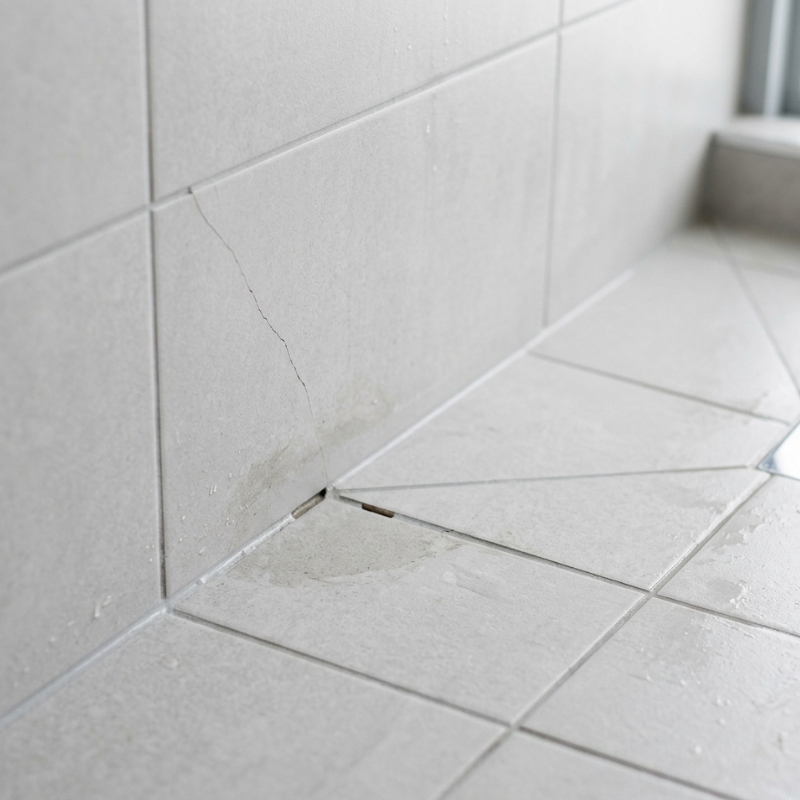
The Silent Drip That Drives Up Water Bills
A cracked tile looks harmless until you trace the musty smell in your ensuite back to damp plasterboard. A thin grout line that has pulled away from the wall can be just as sneaky. Either defect lets water slip behind the surface and start swelling timber, lifting paint, or triggering mould. Home-owners across Sydney ask the same thing right before they book a leaking shower repair: “Is the crack or the grout gap my real problem?”
What Makes a Tile Crack?
Porcelain and ceramic tiles can shrug off years of hot showers, but two forces still split them: movement and impact.
- Building movement. Modern apartments in Parramatta sway a fraction in the wind, and older fibro cottages in Ryde settle again every time the soil dries out. A rigid tile has no give, so even micro-movement can produce a hairline fracture across the glaze.
- Direct impact. A dropped shampoo bottle lands harder than you think. If the tile was already stressed by slight flex in the substrate, one heavy thud finishes the job.
- Temperature swings. Heating pipes that touch the back of the wall shift the tile’s temperature each time the mixer is turned to full hot, expanding and contracting the adhesive bed. Over a few winters the glaze can’t keep up.
Once a crack forms, capillary action draws water through the fracture with every rinse. You rarely see the damage, because moisture follows gravity behind the screen and into the wall cavity instead of falling back into the tray.
How Grout Gaps Open Up
Grout is designed to breathe and flex a little, but age and cleaning chemicals accelerate shrinkage.
- Shrink-back as grout cures and dries. If the initial mix had too much water, it pulls away from tile edges while hardening.
- Acidic cleaners. Bathroom sprays promise a quick shine yet strip the polymer modifiers that help grout stay resilient.
- Vibration. In high-rise bathrooms, you might feel the washing machine next door kick into spin cycle. That shake travels through the slab and jiggles small sections of grout loose.
- Natural settlement. Even a tight new build in Leichhardt will show a 1–2 mm perimeter gap inside three to five years.
Once grout separates, water finds a channel. Unlike a tile crack, grout lines intersect to form a grid, so a failure in one segment may let water spread behind an entire wall faster.
Crack vs Gap – A Side-by-Side Look
| Feature | Tile Crack | Grout Gap |
| Typical width | Hairline to 1 mm | 1–3 mm |
| Visible mould | Rare – surface too glossy | Common along joint |
| Likely leak rate | Slow but focused | Faster, broader spread |
| DIY patch life | 6–12 months | 3–6 months |
| Common in | Floor where weight loads shift | Wall corners and tray junctions |
| Risk to structure | Localised rot directly behind break | Wider moisture plume, higher mould risk |
In 2026, leak reports logged by several Sydney strata managers showed grout-related failures outnumbered tile-crack failures roughly two to one. The broader pathway simply allows water to travel further before anyone notices. Still, a single cracked floor tile can funnel water straight onto timber joists, so neither issue is low-risk.
How to Tell Which Fault You Have
Reflection test
Stand under bright light and tilt your head until the tiles reflect. A crack will break the reflection cleanly. Grout gaps sit lower than the tile face, so the reflection line remains unbroken but you will see a shadowed recess.
Moisture meter
Affordable meters at Bunnings read the dampness level of grout joints. Slide the pins along several joints. A sudden jump on one tile face suggests a crack weeping from beneath.
Talcum powder trick
Dust unscented talc over a clean, dry floor, then run the shower for 60 seconds. Water escaping through a grout gap leaves a dark streak between tiles. A cracked tile usually produces a round wet spot at the fracture.
Prevention Matters More Than Blame
The key to avoiding leaks is keeping both grout and tiles healthy.
– Seal grout every 12-18 months with a penetrating sealer.
– Replace silicone where the wall meets the tray as soon as it starts to cloud or peel.
– Fit a soft rubber mat on the floor if the kids drop shampoo bottles like bowling balls.
– Keep water at 50 °C rather than 60 °C; smaller temperature swings mean fewer stresses.
Half a Saturday once a year costs less than pulling out soggy plasterboard two storeys up.
Repair Paths in 2026
Tile crack fix
Small fractures can be chased out with a rotary tool and filled with colour-matched epoxy. That buys time but rarely lasts beyond a year. For a lasting outcome, lift the damaged tile, inspect the substrate, and re-bed a new tile on flexible adhesive.
Grout gap solution
Rake out loose material 3–5 mm deep, spritz with an anti-fungal cleaner, then pack fresh polymer-modified grout. perimeter joints need neutral-cure silicone instead. Attempting to smear grout over the top locks in moisture and speeds up future failures.
If the leak has already soaked into framing, a licensed technician should pressure-test pipes and scan the cavity with a thermal camera. Understanding how to prevent leaking showers means addressing hidden leaks before they cause further damage. A solid inspection stops you throwing money at surface cosmetics while the timbers rot in silence.
Responsibility in Strata Properties
Under the NSW Strata Schemes Management Act, tiles and waterproofing form part of common property. An owner is typically liable for cosmetic grout repairs, but once water reaches the membrane, the owners corporation must step in. Check your building’s by-laws first; some newer schemes pass responsibility for shower recess upkeep to the lot owner. A quick email to the strata manager saves disputes later.
Current Regulations and Best Practice
AS 3740-2021 “Waterproofing of domestic wet areas” tightened junction requirements. Silicone must extend at least 6 mm past the edge of the junction, and bond breakers are mandatory behind every corner. Ignoring these details nullifies most waterproofing warranties. Read the NSW waterproofing regulations for licence obligations if you plan on more than a superficial touch-up.
When It’s Time to Call a Specialist
If you notice any of the following, a professional assessment beats DIY patching:
- Swollen skirting boards outside the bathroom
- Efflorescence (white salts) on garage walls below the ensuite
- Persistent odour even after cleaning
- Visible mould returning within a fortnight of bleaching
Specialists use thermal imaging, pressure testing, and acoustic sensors to trace water paths without ripping off every wall tile. Up-front diagnostics can shave days off repair time and keep adjoining rooms intact.
Takeaway for Sydney Home-Owners in 2026
Grout gaps cause more shower leak call-outs across the city, but cracked tiles remain a close second. Both defects worsen with time, so the smart move is to inspect quarterly, keep sealants fresh, and address small failures before steam turns them into structural headaches. Staying alert beats paying for a bathroom rebuild five years sooner than planned.