
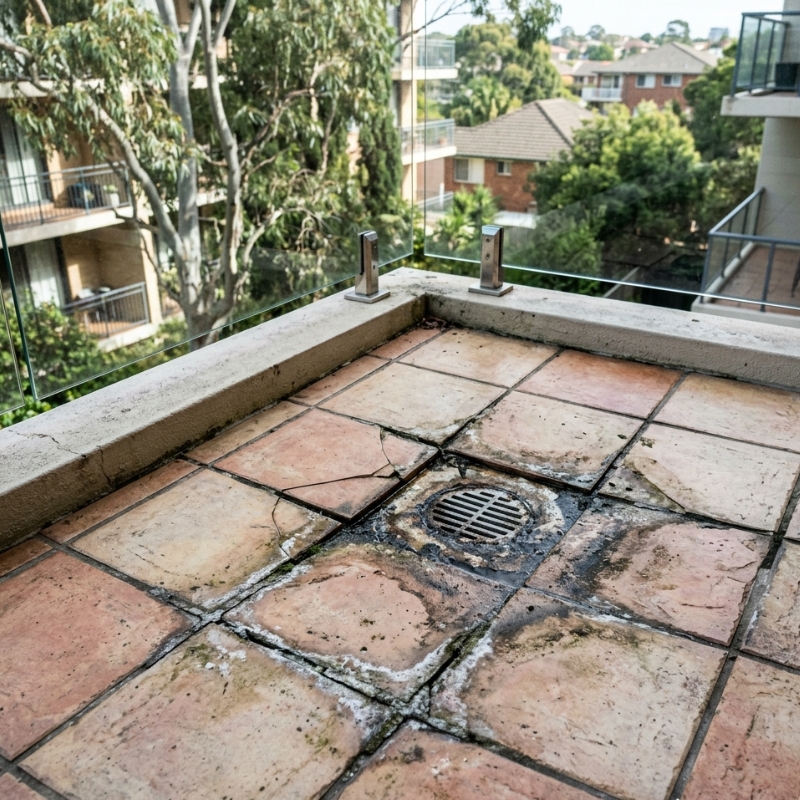
Why Balconies Leak
Sydney balconies battle intense sun, sudden downpours and salty sea air. Over time, those conditions crack tiles, loosen grout and dry out waterproof membranes. Once moisture slips below the surface, it travels, pooling under tiles and creeping into internal walls. The first sign is often a swollen skirting board or a powdery white efflorescence line — long after the water first found a path. Acting quickly matters because concrete slabs wick moisture sideways, turning a small dribble into a neighbour-complaint strata nightmare.
The DIY Appeal
Hardware stores stock roll-on membranes, epoxy fillers and grout pens promising weekend-warrior fixes. The logic feels simple: if you can paint a deck, you can seal a balcony. Add a few YouTube clips and the job seems knock-off-able before Sunday dinner. Saving on labour and avoiding trades-booking delays are strong motivators, especially when you’re staring at a damp patch every time it rains.
A word of reality: a balcony is a structural platform exposed on five sides. Rushing surface work risks trapping water beneath fresh product, so leaks reappear after the next hot-cold cycle. That comeback usually costs more than the original issue because damaged tiles now need lifting and the slab may hold mould. Before pulling on gloves, weigh those hidden costs against professional fees. If you decide expert help is the wiser route, start with a crew that specialises in leaking balcony repairs rather than a general tiler or handyman.
Hidden Risks at Home
The biggest danger with a DIY approach is what you can’t see. Waterproofing in NSW must comply with AS 4654.1-2012. That means correct membrane type, thickness, curing time and termination height. Domestic products often meet the chemical spec, yet failures occur because:
- Existing screeds contain residual moisture that prevents adhesion.
- Drain flanges sit millimetres too low for the new system.
- Movement joints are missing, so fresh membrane tears within months.
Repairing those issues later requires chiselling out the wrongly applied layer, re-screeding and re-tiling. A shower waterproofing membrane failure can lead to this type of costly rework, and you may also forfeit any builder’s warranty if a later professional discovers unlicensed waterproofing work.
Below is a snapshot of common DIY versus professional outcomes.
| Aspect | DIY Quick Fix | Licensed Specialist |
| Upfront cost | Low materials, no labour | Higher labour, commercial-grade products |
| Typical lifespan | 6–18 months before signs reappear | 7–10 years with warranty |
| Warranty | None | Usually 7 years under NSW Home Building Act |
| Insurance cover | Home insurer may reject claim | Recognised workmanship, easier claims |
| Hidden slab moisture test | Rarely done | Calcium-carbide or moisture-meter check |
Mid-project surprises send many Sydneysiders searching for second opinions. Our recent call-outs found silicone smeared over drainage puddle flanges and a peel-and-stick membrane applied straight onto loose tiles. Both balconies needed full strip-outs — triple the original DIY spend. For a practical middle ground, you can handle prep tasks (moving furniture, removing surface debris) then hire a waterproofing team for the membrane and compliance documentation.
Sorting Fact From Myth
Balcony leak repairs attract folklore. Let’s clear the murky waters.
Myth: “Acrylic membrane is fine for any balcony.”
Fact: Acrylics handle foot traffic but struggle in ponded water. Polyurethane hybrids or sheet systems fare better on flat, tiled surfaces.
Myth: “New grout is enough.”
Fact: Grout is porous. Unless the membrane beneath stays intact, the leak will resurface.
Myth: “Council approval is needed every time.”
Fact: Minor remedial waterproofing on existing dwellings rarely needs a DA, but strata rules and licensing laws still apply.
Myth: “Summer heat dries out the leak.”
Fact: Heat bakes moisture into the slab, causing efflorescence and hairline cracks. The leak remains, quietly undermining tiles.
Current NSW guidance states only licensed waterproofers may apply membranes valued over $5,000 or where work affects structural integrity. The NSW Fair Trading waterproofing guide outlines those licence classes, handy when checking a contractor’s credentials.
Moving Forward
Ask yourself three questions before picking up a paint roller. How long must the fix last? Can you verify substrate moisture within the slab? Will your insurer honour a future claim? If any answers feel shaky, calling a specialist might spare you two repairs and a strata dispute.
Sydney’s wet-dry extremes won’t ease in 2026, so proactive maintenance — clearing balcony drains, inspecting tile lines and resealing expansion joints — remains your cheapest tool. When water does break through, matching remedy to root cause pays dividends. Sometimes that is a weekend re-grout. More often, it is targeted membrane replacement by a licensed crew who leave you with a certificate, not guesswork.
A balcony should be the spot for morning coffee, not moisture worries. Choose the path that keeps it that way.