
A slow shower leak rarely announces itself with a dramatic splash. Most of the time it creeps along grout lines or behind wall sheeting for months before you notice anything obvious. By then, water may have warped timber framing, triggered mould growth, or stained the ceiling below. Addressing trouble early is the cheapest path, so it pays to recognise the subtle hints that something isn’t right. If you do need professional help, our leaking shower repair team in Sydney is only a click away, but first let’s cover the warning signs.
Why Early Detection Matters
Sydney’s mix of humid summers and cool, damp winters gives leaks the perfect environment to cause hidden damage. Timber swells and shrinks with moisture, membranes age faster, and mould colonies flourish in dark wall cavities. Catching issues promptly means:
- Smaller repair bills—often a seal replacement rather than new tiles and framing
- Less disruption—no need to relocate the family while walls dry out
- Healthier indoor air—mould spores are stopped before they spread
A little vigilance each time you clean the bathroom can save weeks of messy remedial work later.
Subtle Visual Clues
Not every leak produces a puddle on the floor. Many start as fine cracks or colour changes that are easy to overlook when you’re rushing through a morning routine.
Grout discolouration
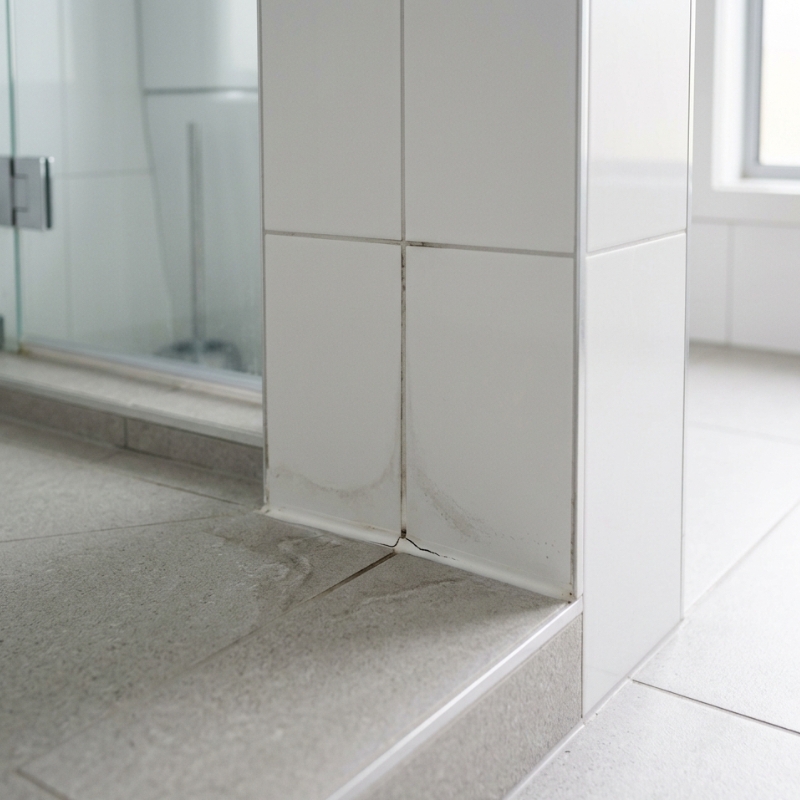
The first giveaway is grout that turns a darker shade or develops orange/pink streaks. Moisture trapped behind tiles wicks minerals and soaps outward, tinting the surface. Persistent dark patches, even after cleaning, point to moisture sitting behind the joint.
Hairline cracks in corners
Silicone shrinks over time. If you notice thin horizontal splits where the floor meets the wall, water is likely slipping through. Corners flex when we step into the recess, so cracked silicone in those spots deserves attention straight away.
Loose or hollow-sounding tiles
A quick knuckle tap on floor tiles should produce a solid, dull thud. A higher, hollow ring usually means the adhesive has let go because moisture has broken the bond. Tile movement opens new pathways for water.
Stains on adjoining walls or ceilings
If the shower backs onto a wardrobe or hallway wall, check for bubbling paint, swollen skirting boards or brown marks on the ceiling below an upstairs bathroom. These are late-stage signs, but they confirm the leak has travelled well beyond the recess.
Non-Visual Warning Signs
Not every cue is something you can see.
Musty odours
A persistent damp smell, even after airing the bathroom, suggests mould is thriving out of sight. Trust your nose—odour often appears before visible spots show.
Higher water bills
An unexplained spike in usage may indicate water is escaping somewhere it shouldn’t. While a shower leak isn’t as obvious as a dripping tap, the cumulative loss over weeks will register on the meter.
Soft or spongy flooring
Laminate or timber just outside the bathroom that feels springy underfoot is absorbing moisture. Check the door threshold, as shower water can track under tile edges and into sub-floor layers.
Simple At-Home Tests
You don’t need specialised gear to confirm suspicions. These quick checks can highlight a problem before you book a trade.
Isolation test
Dry the recess completely, then lay two layers of toilet paper along the perimeter where the wall meets the floor. Run the shower for two minutes, keeping water off the paper. If sheets turn brown or soggy, water is seeping through grout lines rather than staying inside the tray.
Dye test
Add a few drops of food colouring into the shower drain trap. Wait five minutes and inspect surrounding grout joints. Coloured moisture appearing around the drain edge signals a failed seal between waste pipe and tile bed.
Meter reading overnight
Note the water meter before bed, avoid using water overnight, then read it again first thing. Any movement without taps running points to an internal leak. If you’ve ruled out toilets and taps, attention swings to hidden spots like shower pipes.
When to Call a Professional
Some homeowners attempt a DIY re-silicone job, only to watch the same stains reappear weeks later. Understanding what causes persistent shower leaks is essential, as a licensed repairer can use moisture meters, thermal imaging and pressure testing to reveal leaks hidden behind tiles and in plumbing penetrations.
Book a pro when you notice:
- Repeated mould despite regular cleaning
- Tiles pulling away or grout crumbling after patch repairs
- Water showing on ceilings below an upstairs bathroom
- Soft plasterboard or warped architraves near the shower
Professionals can also provide a moisture report—handy evidence for strata committees or insurance claims.
The Role of Waterproofing Standards
NSW follows the AS 3740 waterproofing code for domestic bathrooms. It specifies how far membranes must extend up walls, the required thickness, and curing times before tiling. Understanding these benchmarks helps you judge whether previous renovations were done properly. The NSW Fair Trading site outlines homeowner obligations and contractor licensing for waterproofing work. If you suspect non-compliant installation, review the guidelines on the NSW Fair Trading waterproofing page and discuss findings with your chosen repairer.
Conclusion
Early leak detection isn’t glamorous, but it’s far cheaper than stripping out soggy framing down the track. Keep an eye on changing grout colour, cracked silicone, and swelling architraves. Sniff for musty odours, listen for hollow tiles, and run a simple paper isolation test if you’re unsure. The moment evidence stacks up, bring in a licensed technician to trace and fix the cause before Sydney’s humid climate amplifies the damage. A few minutes of observation now can spare you weeks of renovation upheaval later.