
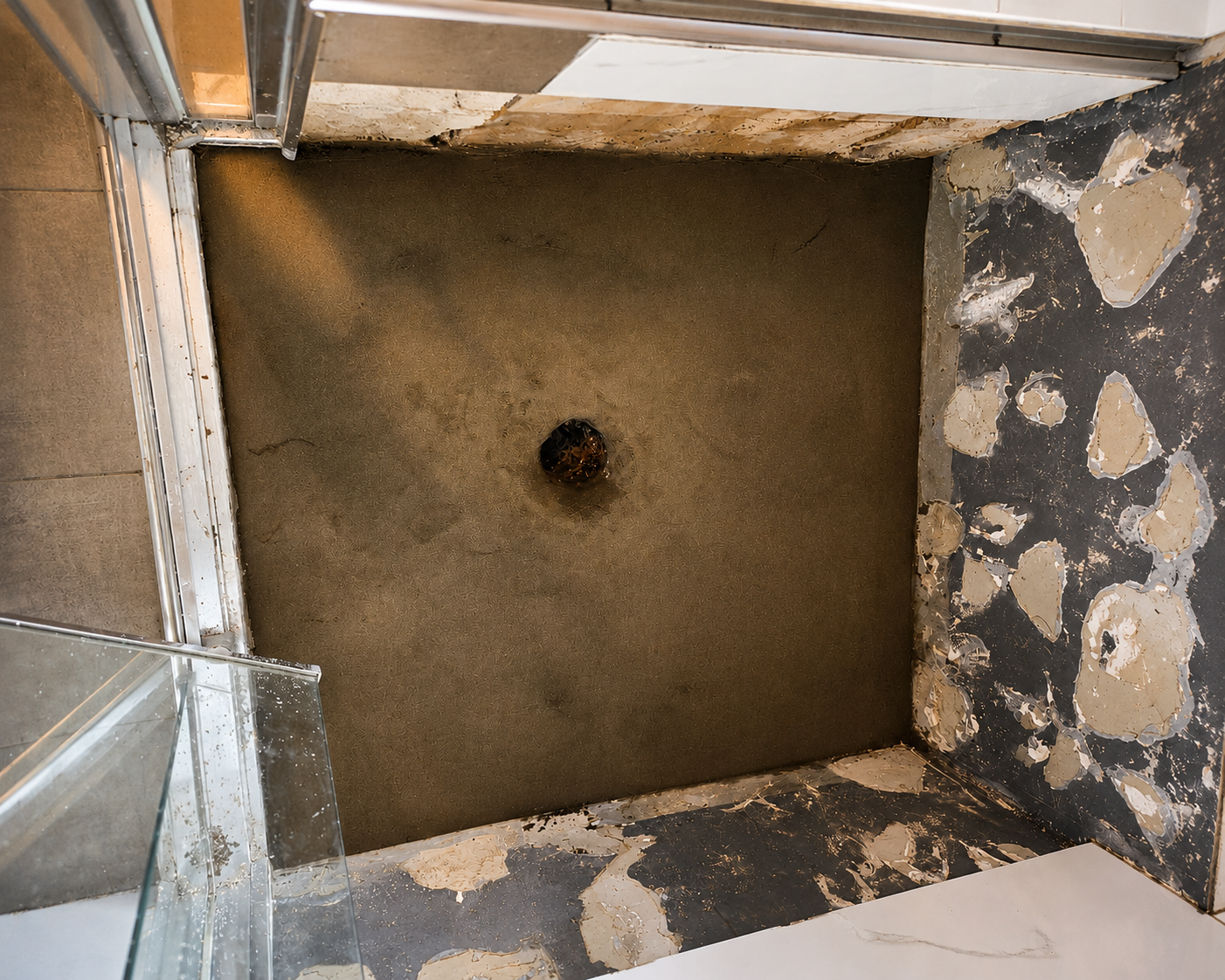
Leaking Shower Repair After Tile Removal becomes necessary when the problem extends below the visible grout, silicone or tiled surface. While some shower leaks respond well to targeted resealing or regrouting, deeper failures may require the floor tiles to be removed so the shower base, drainage connection, substrate and waterproofing can be assessed properly.
The project image for this article shows a shower floor after tile removal, with the base exposed and a new repair layer formed around the floor waste. This type of work is very different from applying silicone over an existing joint. Instead, it gives the repair team access to the parts of the shower that normally remain hidden beneath the finished tiles.
At Leaking Shower Repairs Sydney, we begin with an inspection so homeowners understand whether the problem needs a surface repair or deeper remediation. To arrange an assessment, call 1300 119 805.
Quick Leaking Shower Fixes Compared with Proper Waterproofing
A quick shower repair is not automatically a poor repair. In fact, resealing or regrouting can provide an appropriate solution when the leak comes from a limited surface defect and the underlying shower assembly remains sound.
However, a surface repair cannot restore a failed waterproofing membrane, damaged screed, unstable substrate or poorly connected floor waste. Therefore, the correct repair depends on what has actually failed.
When a Quick Surface Repair May Be Suitable
A targeted repair may work when:
- silicone has lifted or split around the shower screen
- grout has failed in a small, isolated area
- the tiles remain firmly bonded
- the shower floor drains correctly
- there are no signs of widespread moisture damage
- the waterproofing system remains intact
- the leak stops after the failed joint receives proper preparation and resealing
In these situations, professional bathroom sealing or bathroom regrouting may solve the problem without removing tiles.
When Surface Repairs Are Unlikely to Work
A quick repair may only hide the symptom when:
- the waterproofing membrane has failed
- water has entered the screed or substrate
- tiles sound hollow or move under pressure
- grout cracks return soon after repair
- water appears in another room or on the ceiling below
- the shower floor has poor falls or ongoing ponding
- the drain connection does not integrate correctly with the waterproofing
- previous resealing attempts have repeatedly failed
In those cases, applying more silicone or grout will not rebuild the hidden wet-area system. A deeper inspection may confirm that tile removal offers the most practical long-term repair path.
Why Leaking Shower Repair After Tile Removal Sydney May Be Necessary
Tiles create the finished walking surface, but they do not form the complete waterproofing system. Water can pass through small joints and reach the layers underneath. Consequently, the membrane, corners, penetrations and drain connection must prevent that moisture from entering the building structure.
Removing the floor tiles gives the technician direct access to the shower base. The team can then assess whether the existing substrate remains stable, whether moisture has caused deterioration and whether the waterproofing needs full or partial replacement.
The National Construction Code wet-area provisions aim to protect occupants and building elements from damage caused by moisture and water from bathrooms and showers. Proper remediation should therefore address the complete failure rather than only the visible surface. See the NCC guidance on waterproofing in houses for general wet-area information.
Warning Signs That Tile Removal May Be Required
Homeowners cannot always see a failed membrane or damaged substrate. Nevertheless, several warning signs suggest the problem may extend beyond grout or silicone.
Loose or Hollow-Sounding Tiles
Tiles that move, lift or sound hollow when tapped may have lost adhesion. Moisture, movement or poor installation can weaken the bond between the tile and the surface below.
Replacing grout around unstable tiles will not restore that bond. Instead, the affected tiles may need removal so the underlying condition can be checked.
Leaks That Return After Resealing
When a properly prepared silicone repair fails to stop the leak, water may be travelling through another pathway. For example, the membrane, floor waste connection or wall-to-floor junction may have failed.
Repeatedly adding sealant can delay the correct diagnosis while moisture continues to spread.
Water Damage Outside the Shower
Swollen skirting, bubbling paint, damp carpet, musty smells or ceiling stains below the bathroom can indicate water movement beyond the tiled surface.
Professional shower leak detection helps narrow down the likely pathway before the repair scope is confirmed.
Poor Drainage or Standing Water
A shower floor should guide water toward the waste. If water remains in corners or travels toward the shower opening, the floor falls may not perform correctly.
Tile removal may allow the base to be reshaped so water drains more effectively. However, the technician must inspect the whole shower before deciding whether the falls contribute to the leak.
Damaged or Deteriorated Substrate
Long-term moisture can weaken some materials beneath the tiles. If the substrate becomes soft, unstable or contaminated, it may need repair or replacement before a new waterproofing system can perform correctly.
The Tile-Removal Shower Repair Process
A proper remediation process should follow the condition of the bathroom rather than a generic one-size-fits-all method. Although every project differs, the following stages explain what homeowners may expect.
1. Inspecting and Confirming the Repair Scope
The process begins with an on-site assessment. The technician reviews the grout, silicone, tile movement, drainage, penetrations, shower screen edges and visible water damage.
Once the likely cause becomes clearer, the homeowner receives an explanation of the repair options and a defined scope. Leaking Shower Repairs Sydney provides an on-site fixed quote based on the actual findings rather than assumptions.
2. Removing the Shower Floor Tiles
The repair team removes the affected floor tiles and any other materials included in the agreed scope. Careful removal helps expose the shower base while limiting unnecessary disturbance to sound areas.
Some projects require only the shower floor to be opened. Others may need lower wall tiles or surrounding areas removed when moisture damage extends beyond the base.
3. Assessing the Screed, Substrate and Drain
After removal, the technician can examine the hidden layers. This stage may reveal:
- cracks in the screed
- weak or loose substrate
- moisture damage
- poor drainage falls
- gaps around the floor waste
- incomplete waterproofing
- failed wall-to-floor junctions
The repair team should resolve these issues before applying new waterproofing.
4. Rebuilding the Shower Base
Where necessary, the team repairs or reforms the shower base to create a stable surface and suitable falls toward the drain.
This stage matters because a membrane follows the surface beneath it. Waterproofing alone cannot correct an unstable base or major drainage problem.
5. Applying the Waterproofing System
Once the preparation meets the required condition, a suitable waterproofing system can be applied to the specified areas. Corners, junctions, penetrations and the floor waste connection need careful detailing.
Waterproofing work also requires adequate drying and curing before tiling continues. Rushing this stage can compromise the finished repair.
Learn more about the company’s bathroom waterproofing services in Sydney.
6. Reinstating the Tiles and Joints
After the waterproofing has cured, the repair team can install the new tiles, grout and flexible sealant. The finished work should direct water toward the waste while maintaining suitable joints at corners and transitions.
Professional bathroom tiling completes the visible surface and restores the shower for normal use after the required curing period.
Why Waterproofing Should Not Be Applied Over a Damaged Base
A waterproofing membrane needs appropriate preparation and support. Applying it over loose material, dust, cracks, trapped moisture or unstable screed can reduce adhesion and durability.
Therefore, the repair must address the condition beneath the membrane first. This is one of the main differences between a cosmetic patch and a properly scoped shower-base repair.
NSW also regulates waterproofing work and sets qualification and licensing requirements for applicable residential projects. Homeowners can review general information on the NSW waterproofing work page.
Quick Fix vs Actual Waterproofing: Which One Do You Need?
The right answer depends on the leak source.
| Bathroom condition | Possible repair direction |
|---|---|
| Localised failed silicone with stable tiles | Remove and replace the failed sealant |
| Small area of damaged grout with no deeper moisture signs | Targeted grout repair or regrouting |
| Widespread loose or hollow tiles | Tile removal and substrate assessment |
| Recurring leak after surface repairs | Leak inspection and possible deeper remediation |
| Failed waterproofing membrane | Remove affected finishes and restore waterproofing |
| Damaged screed or incorrect falls | Rebuild the shower base before waterproofing and tiling |
No comparison table can diagnose an individual bathroom. Therefore, arrange an inspection before choosing the least expensive or least disruptive option.
Benefits of Repairing the Shower Base Properly
When the shower genuinely needs tile removal, deeper remediation can provide several advantages:
- access to the hidden source of the leak
- removal of loose or damaged materials
- an opportunity to correct drainage falls
- proper integration around the floor waste
- restored waterproofing at critical junctions
- a stable base for new tiles
- reduced reliance on repeated surface patches
Most importantly, the work addresses the shower assembly rather than simply changing its appearance.
Why Choose Leaking Shower Repairs Sydney?
Leaking Shower Repairs Sydney provides leak detection, shower-base repairs, waterproofing, tiling, grouting and sealing services across Sydney. The licensed and trade-qualified team inspects the bathroom first and then explains whether a targeted repair or deeper remediation better suits the condition.
The service approach includes:
- on-site inspection and leak-path assessment
- clear explanation of the likely failure
- repair options matched to the actual problem
- a fixed quote before work begins
- waterproofing certification where applicable to the scope
- care and curing instructions after completion
For more information about the team and its wet-area experience, visit the About Us page.
Book Leaking Shower Repair After Tile Removal Sydney
If your shower keeps leaking after silicone or grout repairs, the issue may sit beneath the tiles. An inspection can determine whether the bathroom needs another targeted repair or whether the shower base and waterproofing require deeper work.
For professional Leaking Shower Repair After Tile Removal Sydney, contact Leaking Shower Repairs Sydney.
Call: 1300 119 805
Website: Leaking Shower Repairs Sydney
Google Business Profile: View Leaking Shower Repairs Sydney on Google
Booking: Request an inspection or fixed quote
Frequently Asked Questions
Does every leaking shower require tile removal?
No. Surface-level problems involving silicone, grout or limited junction defects may be repairable without removing tiles. Tile removal becomes more likely when the membrane, substrate, drain connection or shower base has failed.
Why did my shower keep leaking after resealing?
The sealant may not have addressed the actual leak path. Water may be entering through damaged grout, loose tiles, a failed membrane, a penetration or the floor waste connection.
Can waterproofing be repaired without removing the tiles?
Some targeted surface systems may suit specific bathrooms. However, a failed membrane beneath the tiled surface often requires access to the affected area. An inspection should determine the appropriate method.
What happens after the shower tiles are removed?
The technician assesses the screed, substrate, drainage, floor waste and waterproofing condition. The team then repairs the base, applies the agreed waterproofing system and reinstates the tiles after curing.
Will I receive a fixed quote before the repair?
Yes. Leaking Shower Repairs Sydney inspects the shower and provides a defined on-site quote based on the repair scope.
How do I book a shower-base inspection in Sydney?
Call Leaking Shower Repairs Sydney on 1300 119 805 or submit an enquiry through the online contact form.